
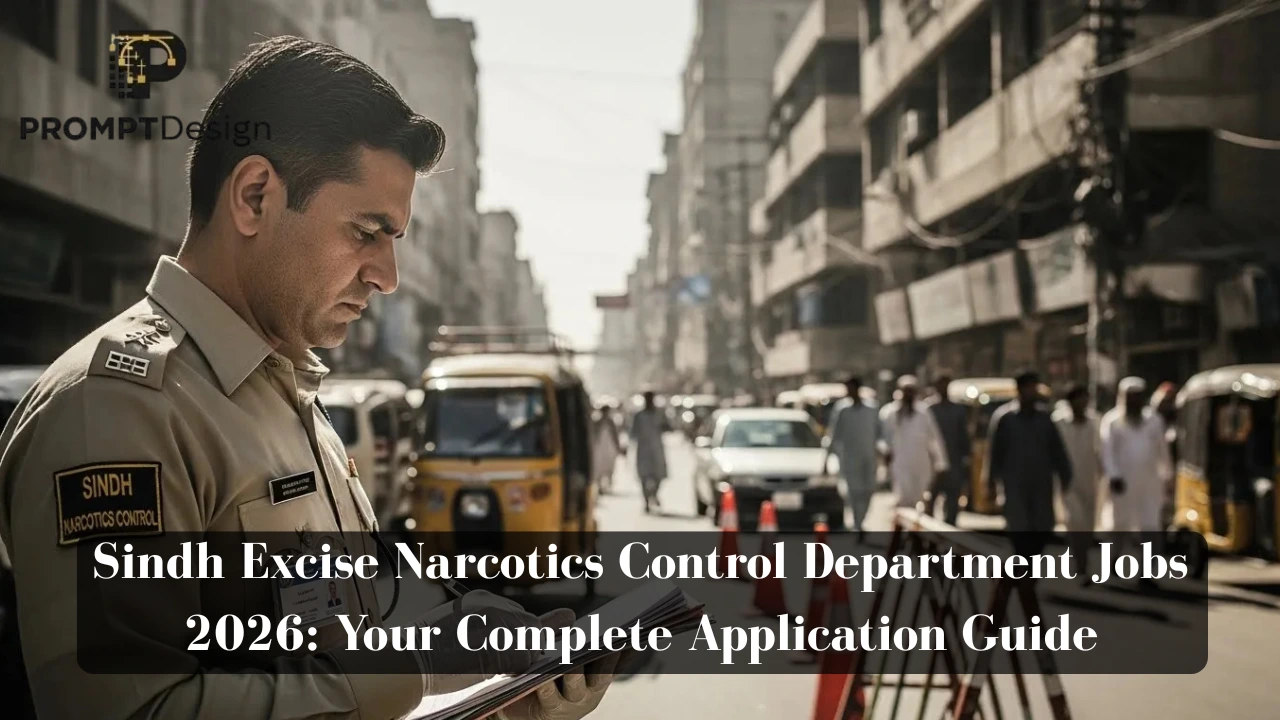
Sindh Excise Narcotics Control Department Jobs 2026 have arrived with golden opportunities for educated youth across the province. If you’re hunting for stable government employment with genuine career growth, this comprehensive guide walks you through everything from vacancy details to submission strategies that actually work.
Why These Positions Matter Right Now
Government jobs in Pakistan have always represented security, respect, and a pathway to building something lasting for your family. But here’s what makes the Sindh Excise Narcotics Control Department different: you’re not just taking a job—you’re joining a mission that protects communities from narcotics threats while ensuring proper revenue collection through excise systems.
The department handles vehicle registration verification, monitors excise duties across Sindh, and leads the fight against illegal drug trafficking. When you join this force, you become part of something bigger than a desk job.
Breaking Down the Available Positions
The recruitment drive covers multiple positions across BPS-11 to BPS-14. Here’s what’s actually on offer:
Narcotics Inspector (BPS-14): This frontline position involves investigating narcotics-related cases, conducting field operations, and maintaining detailed records of enforcement activities. You’ll be the person standing between dangerous substances and vulnerable communities. With 45 positions available, this represents the largest opportunity in the current batch.
Assistant Narcotics Control Inspector (BPS-14): Think of this as your entry point into specialized enforcement work. You’ll support senior inspectors during operations, handle documentation, assist in investigations, and learn the complete operational framework. Thirty positions mean competitive selection, but manageable odds for prepared candidates.
Junior Clerk (BPS-11): Every department needs its administrative backbone. These thirteen positions involve maintaining official correspondence, managing files, processing applications, and ensuring smooth daily operations. If you have strong organizational skills and attention to detail, this role builds a solid government career foundation.
Computer Operator (BPS-12): Modern government departments run on digital systems. Six positions are available for candidates who can handle data entry, maintain computerized records, generate reports, and manage departmental software systems. Your technical skills directly impact operational efficiency.
Junior Stenographer (BPS-12): Official documentation matters in government work. These six positions require shorthand expertise, accurate typing, transcription of meetings and proceedings, and maintaining confidential correspondence. It’s specialized work that commands respect.
Who Can Actually Apply?
Let’s cut through the confusion around eligibility. Here’s exactly what you need:
Educational Requirements: Most positions demand a graduation degree from any HEC-recognized university. Your degree needs Second Division or equivalent CGPA. For clerical and stenographer roles, intermediate qualification with relevant certifications (like typing speed certificates) may suffice. Always verify specific requirements in the official advertisement.
Age Boundaries: The department sets 21 to 28 years as standard age limits. However, Sindh Government rules allow relaxations: government servants get additional years based on service length, special persons receive up to 10 years relaxation, and minority candidates get specific concessions as per provincial policies.
Domicile Requirements: This is non-negotiable. You must hold valid Sindh domicile documentation. Rural, urban, minority, special persons, and transgender quotas follow official government allocation percentages. Your domicile determines your quota category.
Physical Standards for Inspector Positions: Narcotics-related enforcement isn’t office work. Male candidates typically need minimum height requirements (usually 5’6″ to 5’8″), while female candidates have proportional requirements. Expect physical endurance tests including running, stamina assessments, and basic fitness evaluations.
How Selection Actually Happens
Understanding the selection process helps you prepare strategically:
Physical Testing Round: For inspector-level positions, this comes first. Candidates run measured distances within time limits, demonstrate basic physical fitness, and pass medical examinations. Training beforehand makes huge differences—many capable candidates lose opportunities simply because they didn’t prepare physically.
Written Examination: This determines who moves forward. Testing services like SIBA Testing Services conduct examinations covering general knowledge, English, basic mathematics, Islamic studies (or Ethics for minorities), and job-specific technical knowledge. The minimum passing score usually sits at forty percent, but competition means you should target seventy percent or higher.
Interview Stage: Shortlisted candidates face departmental selection committees. They assess your understanding of departmental functions, communication abilities, problem-solving approaches, and overall suitability for government service. Preparation matters—research the department’s role, recent initiatives, and challenges facing Sindh.
Document Verification: Final stage before selection. Bring original certificates, domicile documents, CNIC, educational degrees, experience letters (if any), and character certificates. Missing documents mean disqualification regardless of test performance.
Application Submission Strategy
Many qualified candidates lose opportunities through application mistakes.

Follow these steps exactly:
Visit the official Sindh Job Portal or relevant departmental website. Registration requires your CNIC number, valid mobile number, and active email address. Create your profile completely—missing information causes rejections later.
Upload scanned documents in specified formats (usually PDF or JPG under certain size limits). Poor quality scans lead to verification problems. Use good lighting, ensure text readability, and check file sizes before uploading.
Fill application forms meticulously. Double-check every entry—wrong dates, misspelled names, or incorrect domicile details create problems that surface during verification. Many departments now reject applications with errors rather than requesting corrections.
Submit before the deadline. Last-minute submissions face technical glitches. Aim to submit at least three days before closing dates. Keep confirmation receipts, take screenshots, and note your application reference numbers.
Urban vs Rural: Understanding Quota Distribution
Sindh Government maintains specific quota percentages for different categories. Urban quota typically covers candidates from municipal corporations and town committees. Rural quota serves candidates from village and union council areas. Your domicile specifies your category—attempting wrong classification leads to disqualification.
Special persons quota (disabled candidates), minority quota (non-Muslim citizens), and transgender quota each have dedicated percentages. If you fall into these categories, apply under those quotas for better selection chances.
What Happens After Selection?
Selected candidates receive appointment letters with joining instructions. You’ll likely complete probationary periods (usually ranging from six months to one year) where performance determines permanent appointment.
Training programs familiarize you with departmental procedures, legal frameworks, operational protocols, and administrative systems. Take these seriously—they build competence and credibility.
Career progression follows standard government paths: seniority-based promotions, departmental examinations for advancement, and opportunities for specialized training or deputation to other departments.
Common Mistakes That Cost Applications
Based on previous recruitment cycles, here’s what repeatedly eliminates otherwise qualified candidates:
Incomplete documentation ranks first. Missing one certificate means automatic rejection despite perfect test scores. Create a complete document checklist before starting your application.
Wrong quota selection confuses many applicants. Understand your actual category—urban or rural based on domicile, not current residence. Minority candidates sometimes miss applying under minority quota, facing tougher competition in general merit.
Ignoring physical preparation affects inspector applicants. The physical test isn’t just formality—it eliminates candidates every cycle. Start fitness training weeks before expected test dates.
Late applications face technical problems. Server loads increase near deadlines, causing submission failures. Early submission avoids these completely preventable disasters.
Fake documents seem obvious, but some candidates still try. Modern verification systems catch alterations quickly. One fake document blacklists you permanently from government employment.
Comparing This Opportunity With Alternatives
How do these positions stack against other provincial government opportunities? Excise department jobs offer several distinct advantages. The department maintains consistent recruitment cycles, positions involve both fieldwork and office duties (avoiding monotony), advancement opportunities exist through specialized training, and the work directly serves public welfare.
Compared to purely clerical positions in other departments, excise roles provide more dynamic work environments. Compared to purely enforcement roles like police constables, these positions offer better work-life balance with comparable benefits.
Salary structures follow standard BPS scales with regular increments, but excise positions sometimes include field allowances for officers conducting enforcement operations. Benefit packages include medical coverage, pension rights, and various government servant privileges.
Frequently Asked Questions
Can female candidates apply for narcotics inspector positions? Absolutely. The department encourages female participation across all positions. Female candidates compete under the same merit system with gender-specific quotas ensuring fair representation.
What if my graduation degree is pending final results? Most advertisements allow provisional certificate holders to apply. However, you must complete your degree before the final selection stage. Check specific advertisement clauses regarding pending degrees.
Are private university degrees acceptable? Yes, provided your university has HEC recognition. Verify your institution’s accreditation status on the HEC website before applying. Unrecognized degrees lead to disqualification.
Can I apply if I’m currently working elsewhere? Current employment doesn’t restrict applications. However, selected candidates must provide proper relieving letters from current employers before joining. Private sector employees face no barriers, but government servants need departmental permission.
How long does the complete selection process take? Typical recruitment cycles span three to six months from application deadline to final selection. Physical tests usually happen within six to eight weeks after application closure. Written tests follow two to three weeks later. Final merit lists appear four to six weeks after written examinations.
What happens if I miss the physical test date? Missing scheduled tests without extremely serious documented reasons (medical emergencies, deaths in immediate family) means forfeiting your candidacy. The department rarely reschedules individual candidates. Mark test dates immediately after receiving notifications.
Can I apply for multiple positions in the same advertisement? Usually yes, but verify specific advertisement terms. Some allow multiple applications while others restrict candidates to single position applications. Apply strategically based on your strongest qualifications.
Preparing Your Documentation Checklist
Start gathering these documents now:
Original and photocopies of your educational certificates (matriculation, intermediate, graduation), CNIC (both sides), domicile certificate issued by relevant DC office, recent passport-size photographs (usually 4-6 copies matching specified dimensions), experience certificates if claiming experience-based benefits, character certificate from a gazetted officer, and minority certificate if applying under minority quota.
For special persons quota, obtain medical board certification confirming disability percentage. For transgender applicants, NADRA-issued CNIC clearly showing gender marker is essential.
Keep everything in a dedicated folder. Make multiple complete sets—one for application submission, one for physical test day, one for written test, and one for final verification. Missing documents during any stage costs opportunities.
Final Thoughts on Maximizing Your Success

Landing government positions in competitive environments requires more than meeting basic qualifications. Start physical preparation immediately if targeting inspector positions. Dedicate consistent study hours for written test preparation covering general knowledge, current affairs, basic mathematics, and English comprehension.
Research the Excise and Narcotics Control Department thoroughly. Understand its organizational structure, recent initiatives against narcotics, major challenges facing Sindh’s excise systems, and key leadership. Interview panels appreciate candidates showing genuine interest beyond just securing employment.
Connect with current department employees through professional networks. Their insights into daily work realities, departmental culture, and practical preparation tips prove invaluable. However, avoid any approaches that could appear as influence-seeking—merit alone determines selection.
Track official websites daily during application periods. Departments sometimes issue clarifications, extend deadlines, or announce schedule changes. Missing such updates creates unnecessary confusion.
The Sindh Excise Narcotics Control Department Jobs 2026 represent genuine opportunities for educated youth seeking stable government careers with meaningful public service dimensions. Success demands thorough preparation, complete documentation, strategic application, and persistent effort throughout the selection process.
Don’t let this opportunity slip by treating it casually. Thousands of candidates will apply, but only the most prepared and persistent will succeed. Start your preparation today, gather your documents systematically, and approach each selection stage with complete seriousness. Your government career could begin with this recruitment cycle—make it count.